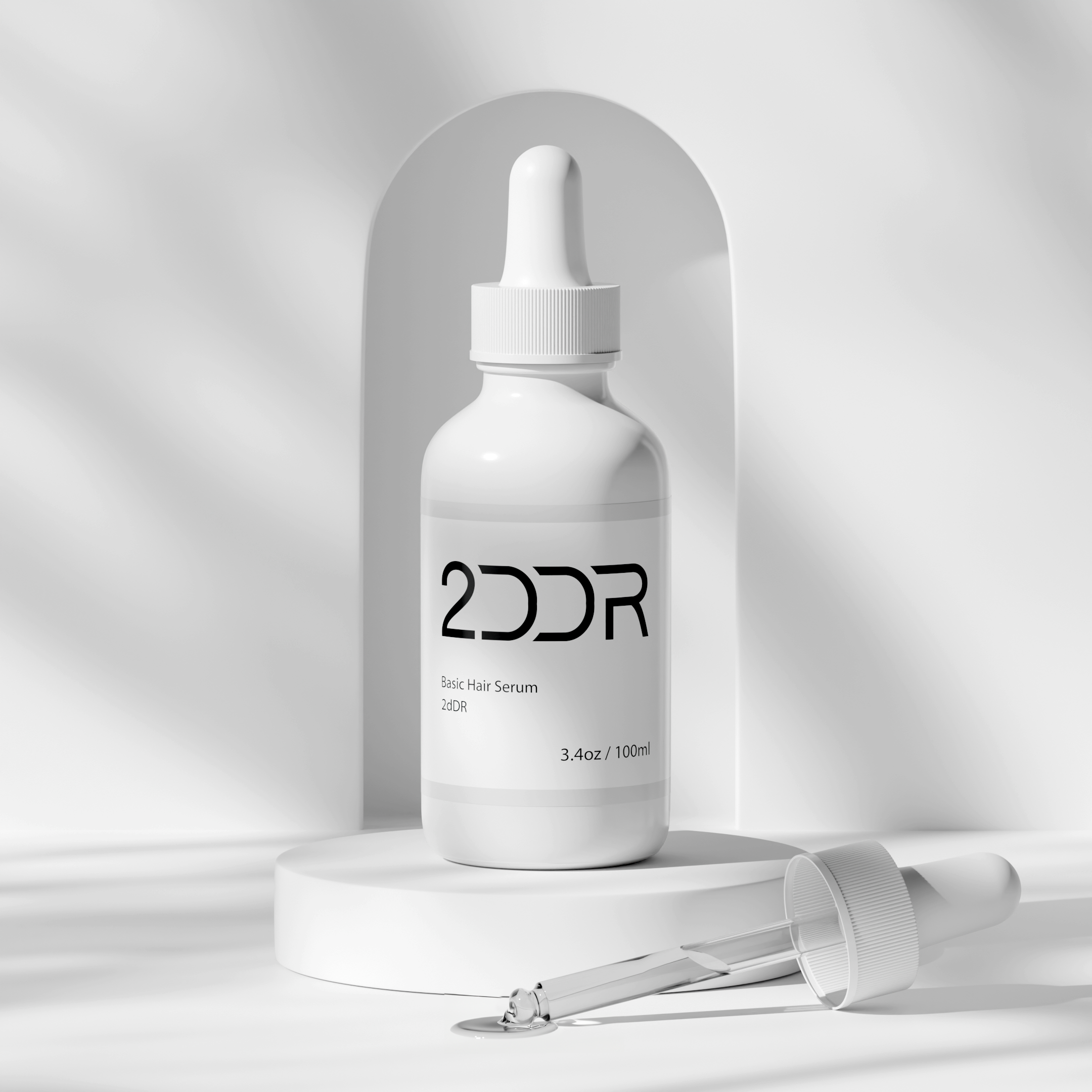
For decades, minoxidil (the active in Rogaine) has been the default over-the-counter answer to thinning hair. Now a naturally occurring sugar called 2-deoxy-D-ribose, or 2dDR, is being positioned as a non-drug alternative. The short answer: in a 2024 animal study, 2dDR matched about 80–90% of minoxidil's hair-regrowth effect — but minoxidil has decades of human clinical evidence behind it, while 2dDR does not yet. Here is an honest, side-by-side look so you can decide what fits your priorities.
The head-to-head at a glance
| Factor | Minoxidil | 2-Deoxy-D-Ribose (2dDR) |
|---|---|---|
| Type | FDA-approved drug | Cosmetic ingredient |
| Evidence in humans | Extensive, decades of trials | Not yet established |
| Key study | Many human RCTs | 2024 Frontiers animal (mouse) study |
| How it works | Widens existing scalp vessels | Encourages new blood-vessel growth |
| Common complaints | Itching, flaking, shedding phase, unwanted facial hair | Fewer reported; long-term data limited |
| Format | Liquid or foam; regimen varies | Cosmetic serum/gel; regimen varies |
What the science actually says
The 2024 study in Frontiers in Pharmacology applied a 2dDR gel to mice bred to model androgenic alopecia. Across the measured outcomes in this small mouse experiment, the authors described the 2dDR gel's effects as roughly 80–90% of minoxidil's: treated mice regrew hair comparable in length and thickness, and follicle density nearly matched. Researchers attribute the effect to angiogenesis — 2dDR appears to spur the formation of new micro-vessels that feed the follicle. Notably, combining 2dDR with minoxidil offered no extra benefit, hinting they work through similar routes.
The crucial caveat: this was a mouse study. There is currently no published long-term human safety or efficacy data for topical 2dDR. Minoxidil, by contrast, has been studied in humans for decades. So the fair framing is not "2dDR beats minoxidil," but "2dDR is a promising, early-stage cosmetic alternative for people who can't or won't use minoxidil."
There's a mechanistic nuance worth understanding, because it shapes expectations. Minoxidil is thought to act largely by widening blood vessels that already exist and by prolonging the follicle's growth phase. 2dDR's proposed route is angiogenesis — coaxing the body to build new micro-vessels around the follicle. If that model holds, 2dDR is trying to improve the follicle's underlying blood supply rather than force a temporary boost, which is part of why some researchers find it interesting. But "interesting mechanism" and "proven in people" are not the same thing, and only human trials can close that gap.
Side effects and tolerability
Minoxidil works for many people but has well-known downsides: scalp itching and flaking, an initial "dread shed," and — for some — unwanted facial hair or, rarely, cardiovascular effects. It also requires indefinite use; stop, and gains typically reverse. These drawbacks are exactly why some people look elsewhere.
2dDR topical serums report fewer side effects in early user feedback, though the absence of large-scale trials means the full tolerability profile is not yet known. If you want to try a 2dDR option, the 2DDR Advanced Hair Formula comes with a two-month supply, a free derma roller, and free US shipping — enough time to assess whether it's working for you.
Bottom line
Minoxidil remains the most evidence-backed topical option for pattern hair loss. 2dDR is a genuinely interesting early-stage alternative with a plausible mechanism and promising preclinical results — but it has not yet been proven in human trials. For people who find minoxidil difficult to tolerate or simply prefer a non-drug approach, a cosmetic 2dDR serum is a reasonable option to explore while the research matures. As always, consult a dermatologist or trichologist if you have concerns about significant hair loss.