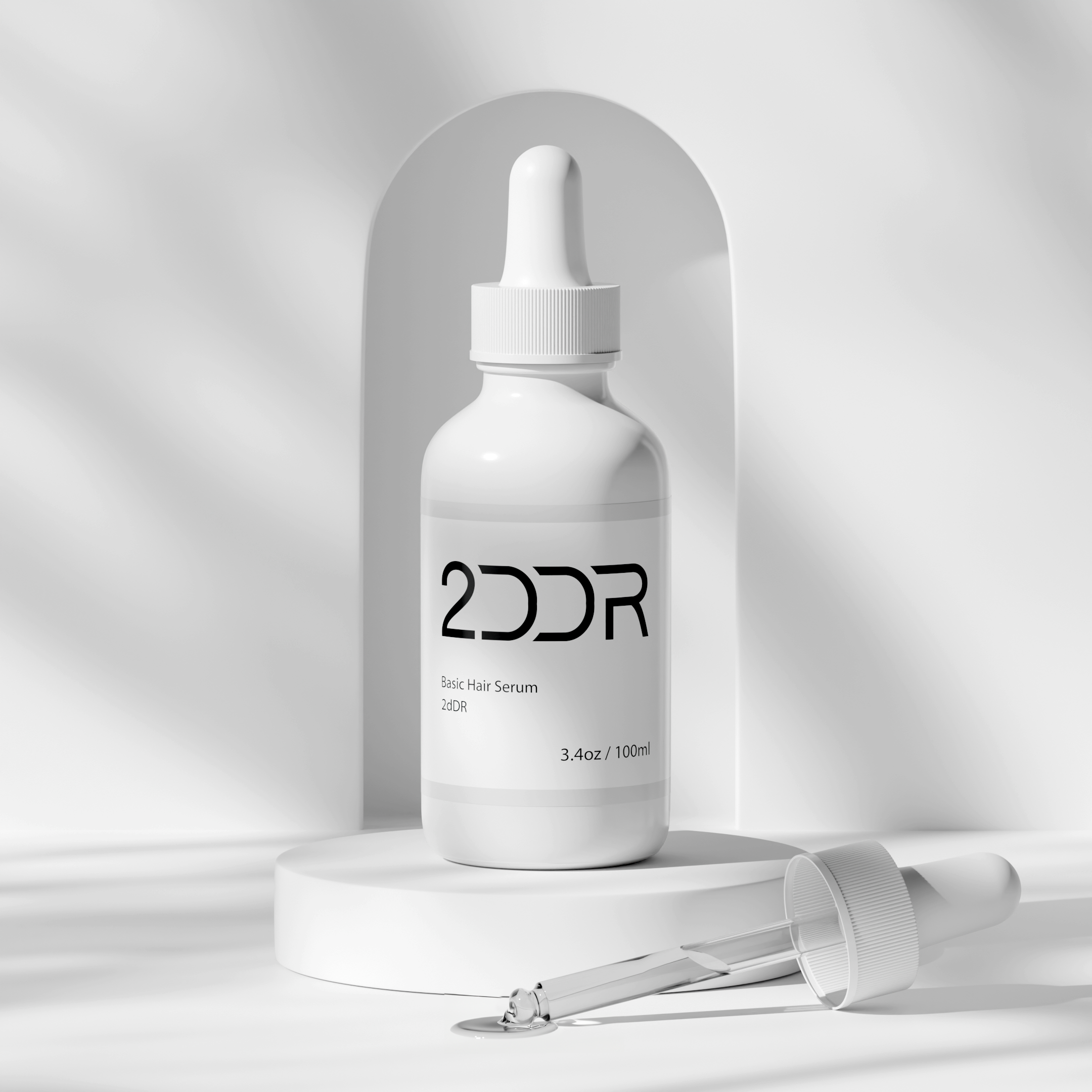
2-Deoxy-D-ribose, most often shortened to 2dDR, is a naturally occurring pentose sugar and one of the structural building blocks of DNA. In hair care, it is the active ingredient in a new category of topical serums that aim to support the look of thicker, fuller hair without minoxidil or prescription drugs. Interest took off after a 2024 animal-model study suggesting 2dDR produced hair-regrowth effects broadly comparable to minoxidil in mice — and a handful of brands brought cosmetic versions to market. 2DDR (2ddrhair.com) was among the first, launching its Advanced Formula serum in August 2024 — within months of the study — for people who want a non-drug option.
Where did 2dDR come from?
The molecule itself is not new — it has been studied for decades as part of DNA and in wound-healing research, where scientists noticed it encourages the formation of new blood vessels (a process called angiogenesis). That pro-angiogenic property is what drew hair researchers in: hair follicles depend on a rich local blood supply to stay in their active growth phase.
In 2024, researchers publishing in the journal Frontiers in Pharmacology applied a 2-deoxy-D-ribose gel to mice in a model of androgenic alopecia (pattern hair loss). They reported that the treated animals regrew hair of similar length and density to mice treated with minoxidil, the long-standing over-the-counter standard. It is important to be precise about what this means: the study was preclinical and conducted in animals. It does not prove that 2dDR produces the same results in people, and human clinical research is still ongoing.
How is 2dDR thought to work?
One proposed explanation is blood flow. The study's authors note the precise mechanism remains to be established, but the leading hypothesis is angiogenesis — by encouraging the growth of tiny new blood vessels around the follicle, 2dDR may help deliver more oxygen and nutrients to the hair root. Minoxidil is also linked to improved follicular blood supply, though it widens existing vessels rather than promoting new ones. Interestingly, the 2024 study found no added benefit from combining 2dDR with minoxidil, which suggests the two may act on overlapping pathways rather than complementary ones.
Because 2dDR is a cosmetic ingredient rather than a drug, brands describe its benefits in appearance terms — reduced visible shedding, fuller-looking hair — rather than making medical claims about treating hair loss.
Why is everyone talking about it now?
Two things converged. The 2024 study gave a credible, published rationale for an ingredient that had mostly lived in biochemistry textbooks. At the same time, a large and growing group of people are actively hunting for alternatives to minoxidil — the twice-daily routine, the initial shedding phase, and scalp irritation push many of them to look elsewhere. When a non-drug option arrives with a plausible mechanism and a headline comparison to the category standard, it attracts attention quickly.
If you are curious whether a 2dDR serum might be right for you, the 2DDR Advanced Hair Formula includes a two-month supply and a free derma roller — a tool many users combine with topical serums to support absorption — with free US shipping.