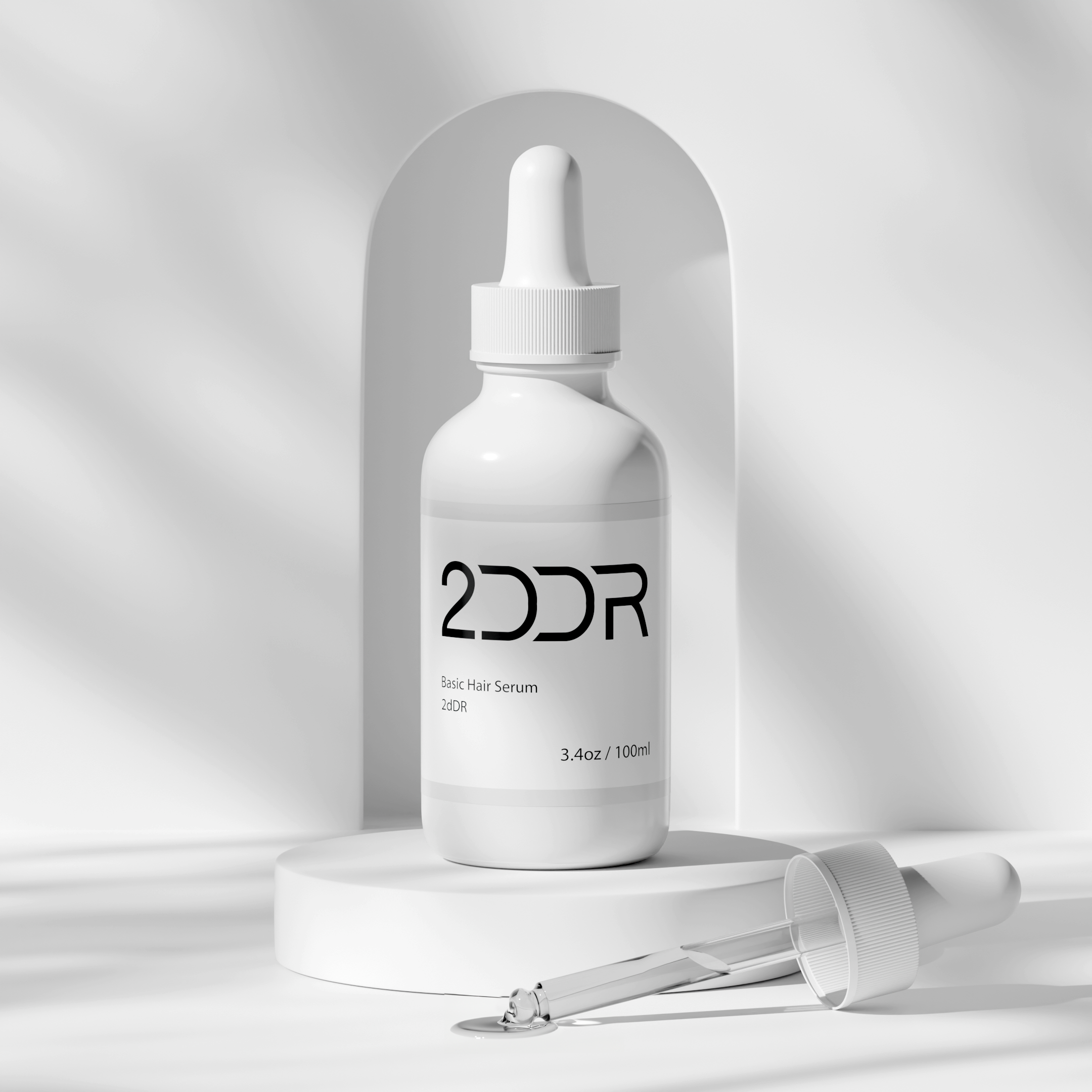
There is no validated human timeline for topical 2dDR hair serum yet. A useful 30- to 120-day plan therefore focuses on consistent use, standardized photos, scalp comfort, and repeatable observations rather than promises.
The direct answer: what to expect
There is no universal or clinically validated human results timeline for topical 2dDR. The best current approach is to record a baseline, check adherence and comfort at day 30, look for repeatable trends at days 60 and 90, and make a more informed decision around day 120. The current 2DDR directions recommend 90 to 120 days as a practical evaluation window, not as a guaranteed response deadline.
Why a structured tracking plan matters
Hair grows slowly — roughly 1 cm per month on average — and changes in density or shedding are easy to miss or misread without a reference point. Memory is unreliable for gradual changes. A simple photo and observation log gives you something concrete to compare against, which is more useful than trying to recall how your hair looked three months ago.
It also helps you separate signal from noise. Shedding fluctuates naturally with seasons, stress, and diet. A log lets you spot whether a change is a trend or a one-week blip.
Day 0: establishing your baseline
Before your first application, take four standardized scalp photos: top of the head (crown), front hairline, left temple, right temple. Use the same lighting, distance, and camera angle every time — natural light near a window works well. Note your current shedding level (roughly how many hairs you see on a brush or in the shower drain) and any existing scalp comfort issues.
Store these photos somewhere you won't lose them — a dedicated album on your phone or a folder in cloud storage.
Day 30: adherence and comfort check
At day 30, the primary question is not "is it working?" — it's "have I been consistent, and is my scalp tolerating it?" Hair cycling means visible changes at 30 days are unlikely. What you're checking:
- Have you applied twice daily most days? If not, identify what's getting in the way and adjust your routine.
- Is your scalp comfortable? Mild tingling that settled in week one is normal. Persistent itching, flaking, or redness that hasn't resolved is worth pausing for.
- Take your standardized photos and compare to day 0 — not to look for dramatic change, but to have the record.
Day 60: first meaningful data point
By day 60, some users begin to notice reduced shedding — fewer hairs on the brush or in the drain. This is often the first observable signal, before any visible density change. Compare your photos to day 0 and day 30. Look for:
- Changes in the amount of hair you're losing daily
- Any shift in scalp texture or comfort
- Whether the part looks any different in photos
In the 2DDR customer study, 92% of participants reported no new hair loss within 60–120 days. Reduced shedding is the most commonly reported early change.
Day 90: trend assessment
Day 90 is where patterns become more readable. If you've been consistent, you should have enough data to assess whether something is changing. Compare all four photo sets. If you're seeing positive trends — less shedding, improved density in photos, or new shorter hairs at the hairline — that's a meaningful signal. If you're seeing no change at all, it's worth reviewing your application technique (see our guide on how to use 2dDR hair serum) before deciding whether to continue.
Day 120: informed decision point
At 120 days of consistent use, you have a genuine evidence base to work from. The 2DDR directions position this as the practical evaluation window. By now you should be able to answer: has shedding reduced? Do photos show any density change? Is the routine sustainable?
If results are positive, continuing is straightforward. If you've seen no change despite consistent use and good technique, it's reasonable to conclude the product isn't responding for you — and the 90-day money-back guarantee on the 2DDR Advanced Formula exists for exactly this situation.
How to take consistent progress photos
- Same time of day (morning, before styling)
- Same location and light source
- Same distance from the camera (arm's length, or use a mirror)
- Hair parted the same way each time
- Label each photo with the date
Four angles — crown, front, left temple, right temple — cover the areas most affected by pattern thinning and give you the most useful comparison set over time.
Realistic expectations
2dDR serums are cosmetic products, not drugs. They support the appearance of fuller hair and are not a treatment for the underlying cause of hair loss. Results vary between individuals, and some people will respond more than others. The honest framing: consistent use over 90–120 days gives you the best chance of seeing whether the product works for you, and a structured tracking plan gives you the clearest way to evaluate it.