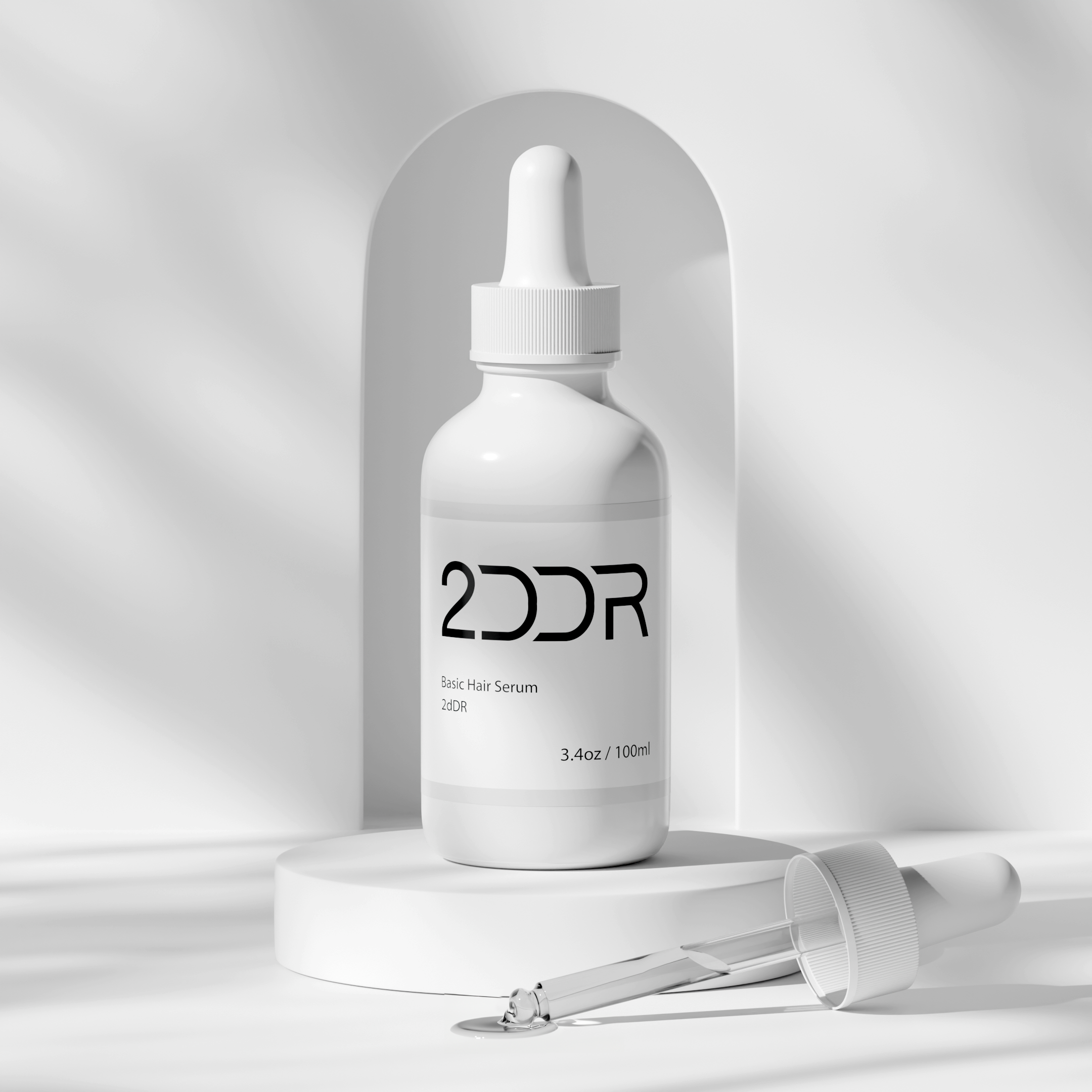
2DDR Advanced Formula is a water-based, oil-free serum built around 4% 2-deoxy-D-ribose and a group of peptides, plant-derived materials, conditioners, solvents, thickeners, and preservatives. Here is what each group does — and how strong the published evidence really is.
A note on evidence levels used in this article: Preclinical means studied in cells or animals but not yet in human trials. Cosmetic use means widely used in formulations with a reasonable safety and tolerability record, but without strong efficacy claims. Emerging human data means small or early human studies exist. Established human data means multiple peer-reviewed human studies support the claim.
The primary active: 2-deoxy-D-ribose (4%)
What it is: A naturally occurring pentose sugar and structural component of DNA.
What it does: Proposed to support hair follicle health via angiogenesis — encouraging the formation of new micro-vessels around the follicle to improve nutrient and oxygen delivery.
Evidence level: Preclinical. A 2024 study in Frontiers in Pharmacology found 2dDR gel produced hair-regrowth effects broadly comparable to minoxidil in a mouse model of androgenic alopecia. Human clinical data is not yet published. The 4% concentration in 2DDR Advanced Formula sits at the middle-upper range of current cosmetic serums.
Why it matters: It is the reason the product exists. Everything else in the formula is there to support delivery, scalp environment, or cosmetic elegance. For more background, see our article on what 2-deoxy-D-ribose is.
Copper peptides (GHK-Cu)
What it is: A tripeptide-copper complex (glycine-histidine-lysine bound to copper) widely used in skin and scalp cosmetics.
What it does: In scalp cosmetics, GHK-Cu is used for its conditioning properties and its association with a healthy scalp environment. It is one of the more studied cosmetic peptides.
Evidence level: Emerging human data for skin applications; cosmetic use for scalp. Several small studies suggest GHK-Cu supports skin repair and may influence hair follicle cycling, though large-scale scalp-specific human trials are limited.
Hexapeptide-11
What it is: A synthetic peptide derived from yeast fermentation.
What it does: Used in hair and skin cosmetics primarily for its conditioning and appearance-improving properties. Often included in premium hair-appearance formulas.
Evidence level: Cosmetic use. In vitro data suggests some influence on keratinocyte behavior; human hair-specific trials are limited.
Pisum Sativum (pea sprout) extract
What it is: An extract from pea sprout, used in cosmetic hair formulations.
What it does: Marketed in cosmetic formulations for its association with hair appearance and scalp comfort. Pea sprout extracts contain isoflavones and other plant compounds.
Evidence level: Cosmetic use with some emerging data. A small number of industry-sponsored studies suggest benefits for hair appearance; independent large-scale human data is limited.
Plant-derived exosomes
What it is: Nano-sized vesicles derived from plant sources (the specific plant source varies by supplier).
What it does: Exosomes are a newer cosmetic ingredient category. They are proposed to act as delivery vehicles that may support cellular communication and ingredient absorption at the scalp.
Evidence level: Emerging. Plant-derived exosomes are an active area of cosmetic research. Early data is promising but the field is young and large human trials are not yet available.
Cinnamic acid
What it is: A naturally occurring organic acid found in cinnamon and other plants.
What it does: In cosmetic formulations, cinnamic acid is associated with antioxidant properties and has been studied for potential effects on scalp circulation. Some research suggests it may support blood flow at the application site.
Evidence level: Preclinical and cosmetic use. Animal and in vitro data on circulation effects exist; human scalp-specific data is limited.
Niacinamide
What it is: A form of vitamin B3, one of the most widely used and well-studied cosmetic actives.
What it does: In scalp formulations, niacinamide is used for its well-established tolerability and its association with scalp comfort and barrier support. It is one of the few cosmetic ingredients with a substantial human evidence base.
Evidence level: Established human data for skin applications; cosmetic use for scalp. Its inclusion here is primarily for scalp comfort and formulation stability.
Base ingredients: conditioners, solvents, thickeners, and preservatives
The remaining ingredients — including water, butylene glycol, carbomer, and standard preservatives — make up the vehicle that keeps the formula stable, ensures it absorbs cleanly, and maintains a shelf life. The oil-free, unscented base is a deliberate formulation choice: it allows daily use without leaving residue or clashing with styling products. For more on why base formulation matters, see our guide on how to choose a 2dDR hair serum.
The honest summary
The strongest evidence in this formula is for niacinamide (established human data in skin) and GHK-Cu (emerging human data). The primary active — 2dDR at 4% — has compelling preclinical data but no published human clinical trial yet. The supporting actives are chosen for plausible mechanisms and cosmetic track records rather than proven hair-specific efficacy in humans.
That is an honest picture of where the science stands. If you want to try the formula yourself, the 2DDR Advanced Formula comes with a two-month supply, a free derma roller, free US shipping, and a 90-day money-back guarantee.