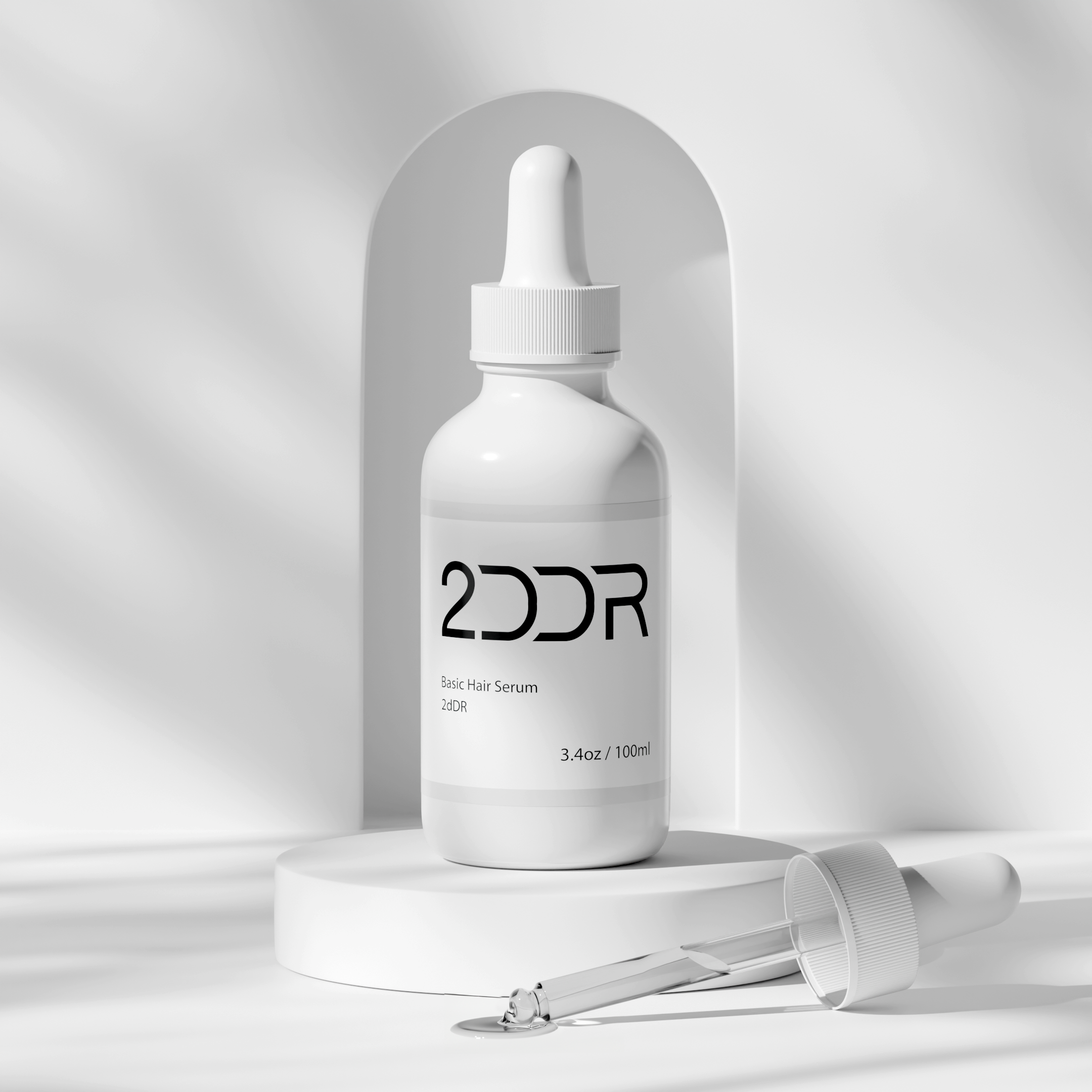
40% of women notice hair thinning by menopause. You're not imagining it.
That widening part in your photos, the extra hair on your pillow: it's hormonal, it's common, and "that's normal at your age" isn't an answer.








Try 2DDR Advanced consistently. If you don't see the change you're looking for by day 90, it's free.
You're not imagining this.
It starts small. More in the shower drain. A part that photographs wider than it used to. Maybe it came up at your annual physical, tucked in almost as an afterthought after questions about sleep and hot flashes, and got filed under "normal for your age."
Hormonal hair thinning is one of the most common, least addressed symptoms of perimenopause and postmenopause.
Hair changes in midlife can feel far bigger than hair.
You can understand that menopause changes your body and still feel blindsided when your ponytail gets smaller, your part looks brighter under overhead light, or washing your hair starts to feel like a count of what you lost. Hair is tied to identity, age, femininity, routine, and the face you recognize in the mirror. Research on menopausal hair change describes real effects on stress, anxiety, and self-esteem.1
Where are you in the transition?
When hormones are fluctuating, hair can feel unpredictable too.
Perimenopause is the transition leading up to menopause. Estrogen and progesterone can fluctuate for years before the final period, and those shifts can affect the hair cycle. Some women notice increased shedding; others notice a gradual reduction in density, especially through the part or crown.2
After menopause, density and texture changes may become easier to see.
After menopause, ovarian estrogen production is much lower. Hair follicles are estrogen-sensitive tissue, and the hormonal transition is associated with changes in hair density, caliber, texture, and cycling. Female-pattern hair loss also becomes more common with age.1
This section is educational and is not a diagnosis. Menopause can coincide with several different hair-loss patterns, and more than one can occur at the same time.
What's Actually In It
Here's every active ingredient in 2DDR Advanced Formula and what each one is doing. Further down we show what it would cost to buy these six supporting actives on their own.
Why This Isn't "Just Aging."
Estrogen helps keep hair in its growth phase longer. As levels shift during perimenopause and after menopause, more follicles can move into the shedding phase at the same time, which is what shows up as thinning, a widening part, or more hair left behind after brushing.
It's a hormonal shift, not a personal failing, and it's not something most hair-loss options on the market were built to address in the first place.
Shedding and thinning can look similar in the drain. They are not always the same process.
A healthy scalp continuously moves follicles through growth, transition, rest, and shedding. Hormonal shifts can influence that timing, but so can stress, illness, nutrition, genetics, and other medical factors. Understanding the pattern gives you a better question to ask next.3
The follicle is actively producing a hair shaft. This is the phase people generally want to preserve for as long as possible.
Growth winds down and the follicle moves through a short transition before entering its resting stage.
The follicle rests before the old hair is released. Stress, illness, hormonal change, and other triggers can shift more follicles toward this stage at once.
The old strand releases as the follicle prepares for a new cycle. Some shedding is normal; a meaningful increase from your baseline is what gets your attention.
Which description is closest to what you are seeing?
Telogen effluvium often follows a trigger such as significant stress, illness, surgery, rapid weight loss, or hormonal change. It is often temporary once the trigger resolves, but persistent or severe shedding deserves professional evaluation.3
Normal shedding is usually around 50–100 hairs a day.
The number is not a home diagnostic test—wash frequency, hair length, curl pattern, and styling all change what you notice. The more useful clues are change from your normal, where the density is changing, how quickly it changed, and what happened in the months before it started.3
If you are unsure, take consistent photos of your center part, temples, and crown every 4 weeks in the same lighting. A repeatable record is more useful than checking the mirror every day.
Hair shedding during menopause can have more than one cause.
Midlife is often when several variables collide: hormonal transition, stress, changes in diet or weight, new prescriptions, thyroid shifts, genetics, and accumulated hair-care damage. Competent hair-loss evaluation is about separating those signals rather than assuming one cause explains everything.
loss is sudden or patchy; the scalp burns, hurts, scales, or scars; the frontal hairline is clearly receding; eyebrows are also thinning; shedding is severe or persistent; or you have other symptoms that suggest a medical or nutritional issue.
Thyroid disease can cause noticeable thinning and can overlap with menopause symptoms.4
Deficiencies can contribute to hair loss. A clinician can decide whether testing makes sense for you.4
A major physical or psychological stressor can trigger diffuse shedding that appears a few months later.3
Large calorie or weight changes can trigger telogen effluvium and can coincide with midlife metabolic changes.
Some medicines can contribute to shedding. Do not stop a prescription on your own—bring the timing to the prescriber who manages it.
A widening part is common in female-pattern hair loss; patchy or scarring patterns require a different workup. More than one pattern can coexist.5
The Non-Hormonal Difference
I'm pretty stunned at how quickly this product works. I had such bad hair loss a year ago, presumably from perimenopause. I tried supplements, vitamins, collagen, oils, and red light therapy. I really didn't want to try Minoxidil because of the side effects and its toxicity to dogs, not to mention the initial shedding. I'm so grateful for this product and I can't rave enough about it. At only two weeks, I noticed my hair was falling out less and in only two months I could see a difference. I just ordered another six months worth of product and I'm just hoping the growth continues!
There is no single “menopause hair treatment.”
Different options act on different problems. The useful question is not “what is strongest?” It is “what pattern am I dealing with, what evidence supports this option, what trade-offs matter to me, and what can I realistically stick with?”
Topical minoxidil
Where it fits: Topical minoxidil is FDA-approved for female-pattern hair loss and is a standard medical option. It can help slow progression and support regrowth in some women.5
What to know: Results take time and ongoing use is generally needed to maintain benefit. Scalp irritation and unwanted facial hair can occur, and some people notice temporary increased shedding after starting.
Prescription oral / anti-androgen options
Where they fit: Dermatologists sometimes use oral minoxidil, Spir., Finast., or other prescription approaches depending on the diagnosis and the patient.
What to know: Some uses are off-label for female hair loss and require individualized medical screening, dosing, and monitoring. This is clinician territory—not a one-size-fits-all checkout decision.
Menopausal hormone therapy (HRT / MHT)
Where it fits: Menopausal hormone therapy is prescribed based on menopause symptoms and an individual benefit-risk assessment. Hair changes may occur alongside treatment, but HRT is not generally prescribed as a primary hair-loss treatment.
What to know: The role of estrogen therapy specifically for menopausal hair loss remains an active research question. If you use HRT, discuss hair concerns with the clinician managing it rather than changing treatment for hair on your own.
Oral hair supplements
Where they fit: Supplements may target nutrition, stress pathways, or botanical mechanisms, and some brands have clinical data on their finished formulas.
What to know: “Hair vitamin” does not automatically mean a deficiency exists. More is not always better, and high-dose supplements can interact with medications or interfere with lab tests. A documented deficiency deserves a targeted conversation with a clinician.
2DDR Advanced cosmetic serum
Where it fits: 2DDR Advanced is a topical, non-hormonal cosmetic formula built around 2-deoxy-D-ribose plus supporting cosmetic actives. It does not require a prescription.
What to know: The core 2dDR research cited on this page is promising preclinical research in an animal model, not a completed human clinical trial of the finished 2DDR Advanced product. Customer survey and testimonial outcomes are different evidence categories and should be read that way.6
Built on Research, Not Hype.
The core compound, 2-deoxy-D-ribose (2dDR), was studied in a 2024 peer-reviewed pre-clinical study published in Frontiers in Pharmacology by University of Sheffield researchers. In that study, 2dDR performed comparably to minoxidil in promoting hair regrowth. Further promising results are pending clinical trials research.
2dDR isn't the only active ingredient doing work here. The other five ingredients in 2DDR Advanced each have their own research behind them for hair and scalp health, and each one, including 2dDR itself, is also sold on its own, usually as the lead active ingredient in a whole separate product. Here's what buying the equivalent actives separately would actually cost.
What we won't do: lean on a celebrity's morning routine to make our case. Here's the actual research, and a clinician's read on it in the next section, so you can decide for yourself.

"The 2DDR Healthcare Advanced formula is the most promising hair growth formula in decades."
Dr. Bhinder has also written independently about the science behind 2DDR Advanced's active ingredients, explaining how each one works. Read the full ingredient breakdown.
Paid partnership with Dr. Bhinder. All opinions are his own.
Tess B. / Wyoming
I noticed my hair was falling out less within 2 weeks, and in 2 months I could see growth.
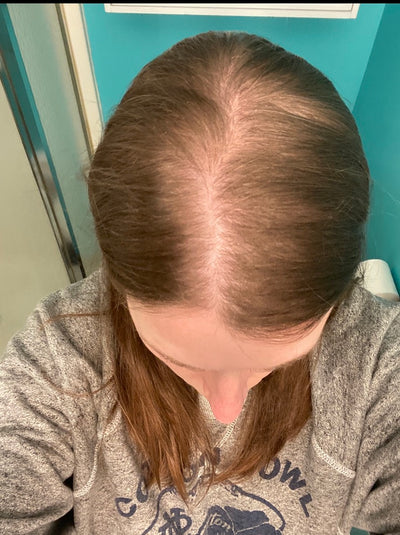 DAY 1
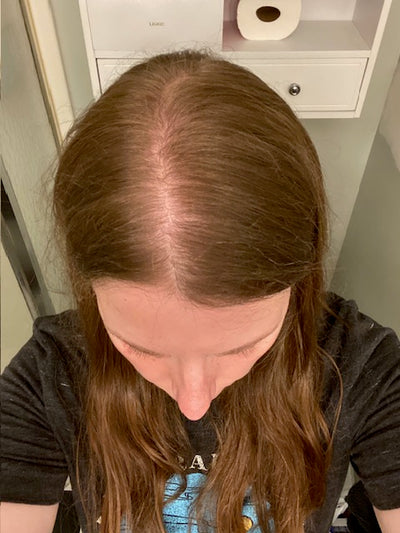 DAY 180
Results vary. Most women see the clearest change by staying consistent through at least one full growth cycle.
Fits the Routine You've Already Built
No grease. No scent. Dries in minutes. Since it's just a sugar molecule, you can use it with color-treated and chemically processed hair. Apply it in 30 seconds and move on with your morning exactly the way you always have.

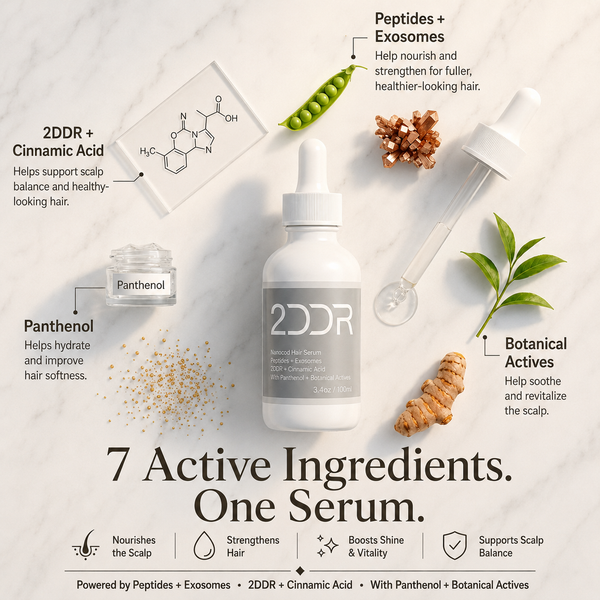
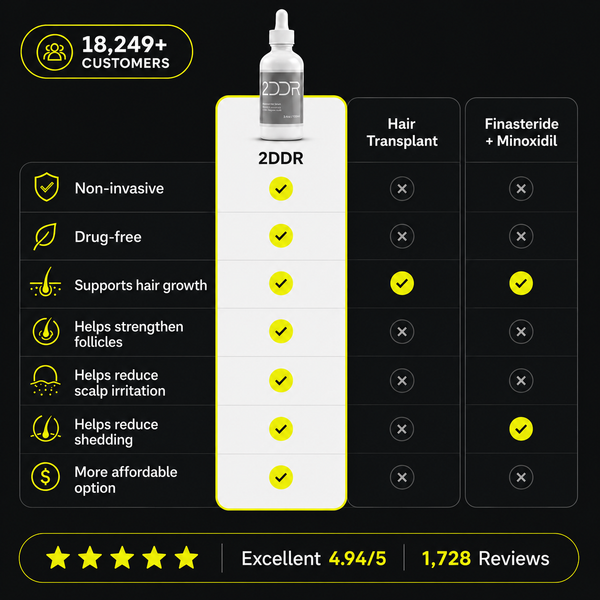

Advanced Hair Formula
- US-Registered Facility
- Free Shipping within the US
- A 6-month commitment is highly recommended
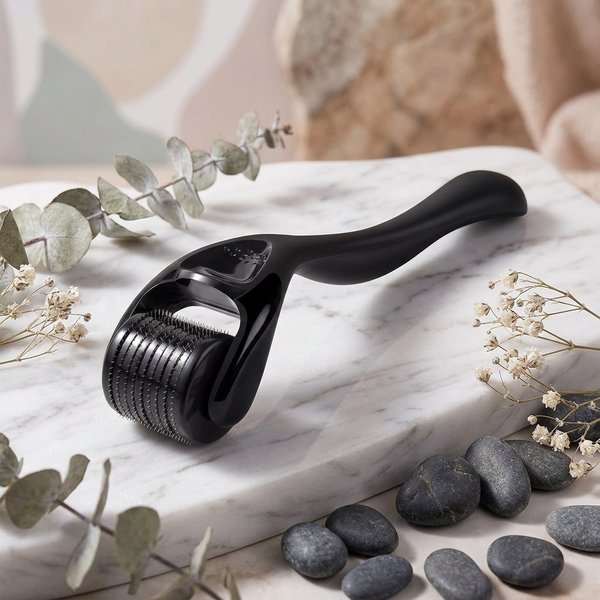
- Free Derma Roller included
90-Day Satisfaction Guarantee: If you don't see the change you're looking for by day 90, it's free.
Less cost than a month of most oral hair supplements, and less than buying the same six active ingredients separately.
Inez D.
Hi My boyfriend bought this serum for me 6ish months ago so I cannot review on your site, but I wanted to share my experience so far. My hair was thin and falling out from years of coloring. As you can see, the improvements since using 2DDR over the past six months have been amazing. Split ends have also reduced by at least half which is weird, but def says something positive about the health of my hair. Thank you! Thank you! Thank you!

Want to verify the education above? Start here.
These are independent dermatology and peer-reviewed sources used for the menopause and hair-loss education on this landing page. Product claims and customer experiences are identified separately elsewhere on the page.
- Gupta AK, et al. Menopause and hair loss in women: Exploring the hormonal transition. Maturitas. 2025.
- National Institute on Aging: menopause and the menopausal transition.
- American Academy of Dermatology: hair shedding vs. hair loss / telogen effluvium.
- American Academy of Dermatology: common causes of hair loss including thyroid disease and nutritional deficiencies.
- American Academy of Dermatology: female-pattern hair loss, signs and treatment context.
- Anjum MA, et al. Stimulation of hair regrowth in an animal model of androgenic alopecia using 2-deoxy-D-ribose. Frontiers in Pharmacology. 2024.
Educational references do not mean these organizations endorse 2DDR Advanced. Always discuss persistent or concerning hair loss with an appropriately qualified healthcare professional.
“Promising” and “proven” are not the same word.
The 2024 2dDR paper is useful because it gives a biological signal worth following. It is also preclinical. That means it can support a research rationale, but it cannot by itself tell you exactly how a finished cosmetic formula will perform in a menopausal woman.
Tests a mechanism in laboratory or animal models. Useful for deciding what deserves further study.
Studies outcomes in people under a defined protocol. Study design, size, comparator, and endpoint all matter.
Useful for real-world signal and experience, but not a substitute for a controlled clinical trial.
Questions Before You Start
2DDR Advanced is applied topically to the scalp and does not contain added hormones. Always consult your physician regarding compatibility with your medications.
Start now. If it's not working by day 90, it's free.
Non-hormonal, university researched, and built for exactly this stage of hair growth.
BUY NOW